
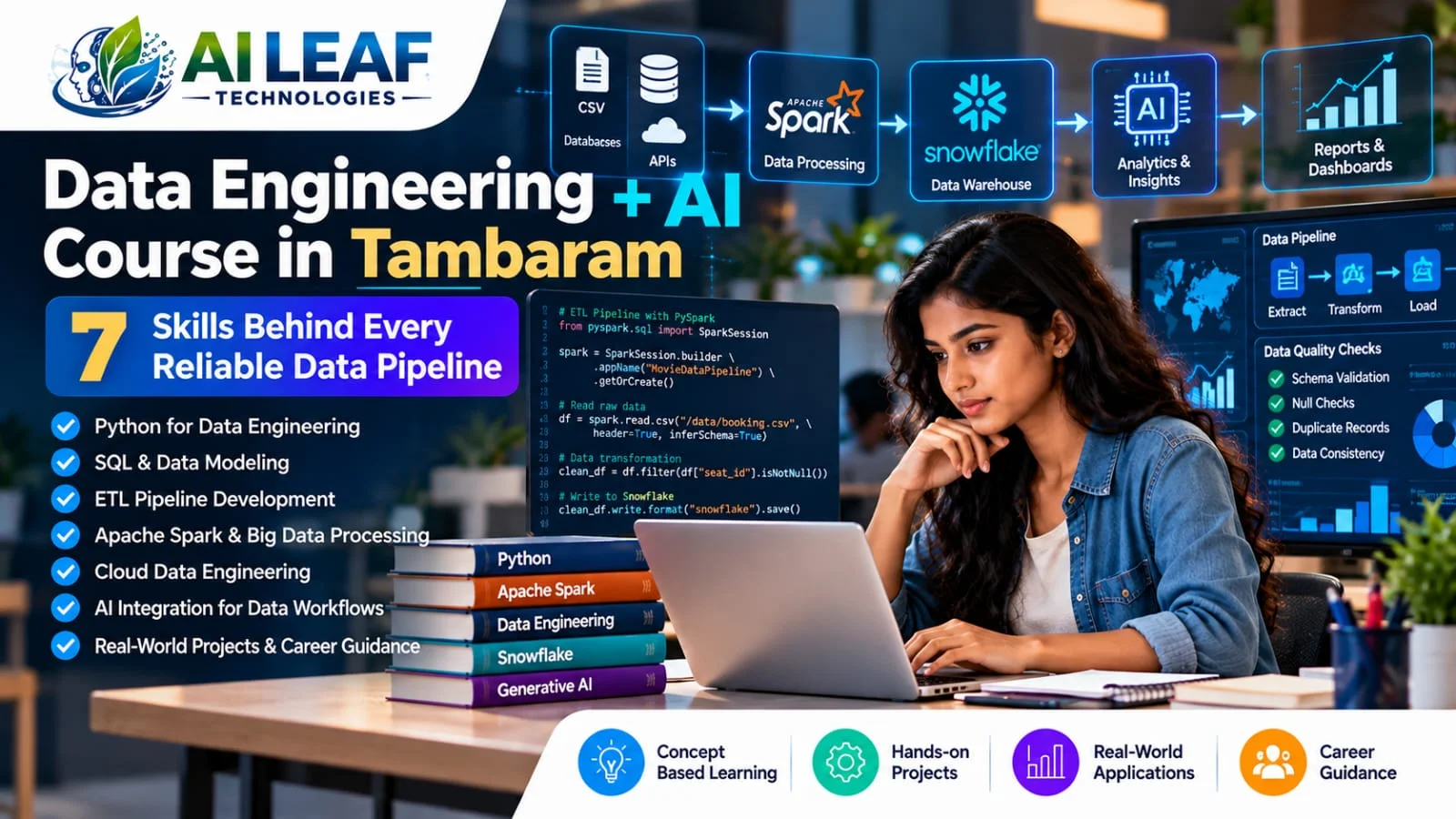
𝗗𝗮𝘁𝗮 𝗘𝗻𝗴𝗶𝗻𝗲𝗲𝗿𝗶𝗻𝗴 +𝗔𝗜 𝗖𝗼𝘂𝗿𝘀𝗲 𝗶𝗻 𝗧𝗮𝗺𝗯𝗮𝗿𝗮𝗺: 𝟳 𝗦𝗸𝗶𝗹𝗹𝘀 𝗕𝗲𝗵𝗶𝗻𝗱 𝗘𝘃𝗲𝗿𝘆 𝗥𝗲𝗹𝗶𝗮𝗯𝗹𝗲 𝗗𝗮𝘁𝗮 𝗣𝗶𝗽𝗲𝗹𝗶𝗻𝗲
- Introduction: The Plumbing Behind Every Dashboard
- Seven Practical Skills to Develop
- Where AI Fits in Modern Data Pipelines
- A Portfolio Project: Cinema Booking Data Pipeline
- Getting Ready for Data Engineering Interviews
- Choosing a Data Engineering +AI Course in Tambaram
- Data Engineering Training at AI Leaf Technologies
- Conclusion
- Frequently Asked Questions
𝗜𝗻𝘁𝗿𝗼𝗱𝘂𝗰𝘁𝗶𝗼𝗻: 𝗧𝗵𝗲 𝗣𝗹𝘂𝗺𝗯𝗶𝗻𝗴 𝗕𝗲𝗵𝗶𝗻𝗱 𝗘𝘃𝗲𝗿𝘆 𝗗𝗮𝘀𝗵𝗯𝗼𝗮𝗿𝗱
A Data Engineering +AI Course in Tambaram should teach you to build the plumbing that every dashboard, report and AI model quietly depends on. When the plumbing works, nobody thinks about it. When it leaks, people simply see wrong numbers on a screen and lose trust in everything around them.
Consider a chain of eight cinemas. Online bookings arrive as a stream of events all day, each food counter sends its own file at closing time, and a payment partner posts settlements the next morning. Management wants live seat availability, a nightly revenue report and a monthly forecast. Three different sources, three different clocks, and one person responsible for making them agree. That person is the data engineer.
The field blends Python, SQL, large-scale processing, cloud services and, more recently, AI. Brochures tend to name every tool imaginable, which makes sensible comparison hard. The seven skills below describe what is actually worth practising, so you can measure any programme against real abilities instead of buzzwords.
𝗦𝗲𝘃𝗲𝗻 𝗣𝗿𝗮𝗰𝘁𝗶𝗰𝗮𝗹 𝗦𝗸𝗶𝗹𝗹𝘀 𝘁𝗼 𝗗𝗲𝘃𝗲𝗹𝗼𝗽
𝗦𝗸𝗶𝗹𝗹 𝟭: 𝗨𝘀𝗲 𝗣𝘆𝘁𝗵𝗼𝗻 𝗮𝘀 𝗬𝗼𝘂𝗿 𝗘𝘃𝗲𝗿𝘆𝗱𝗮𝘆 𝗧𝗼𝗼𝗹𝗸𝗶𝘁
Python reads files, calls APIs, tidies messy fields and links one step of a pipeline to the next. Learn to write small functions, cope with missing files and strange values, and record what each run did.
A good first exercise is a script that opens yesterday’s ticket file, rejects rows with impossible seat numbers, and writes those rejects to a separate file for review. Dropping bad rows silently is the habit to avoid.
𝗦𝗸𝗶𝗹𝗹 𝟮: 𝗧𝗿𝗲𝗮𝘁 𝗦𝗤𝗟 𝗮𝘀 𝘁𝗵𝗲 𝗦𝗵𝗮𝗿𝗲𝗱 𝗟𝗮𝗻𝗴𝘂𝗮𝗴𝗲
Analysts, engineers and managers all meet in SQL, so fluency pays off every day. Beyond basic SELECT statements, practise joins, common table expressions and window functions for running totals and rankings.
Count rows before and after every join, because a join on the wrong column can multiply revenue without any error message. Test tricky queries on a tiny table where you can work out the answer by hand. If your SQL needs strengthening, Oracle SQL and PL/SQL training is one way to build that practice.
𝗦𝗸𝗶𝗹𝗹 𝟯: 𝗦𝗵𝗮𝗽𝗲 𝗗𝗮𝘁𝗮 𝗦𝗼 𝗤𝘂𝗲𝘀𝘁𝗶𝗼𝗻𝘀 𝗔𝗿𝗲 𝗘𝗮𝘀𝘆 𝘁𝗼 𝗔𝘀𝗸
Data modelling decides how pleasant life will be for everyone downstream. In a common design called a star schema, a central table records events, such as one row per ticket sold, and smaller tables describe the theatre, the film and the date around it.
The first decision is the grain: what exactly does one row represent? Settle that before building anything. With a clear grain, an analyst can ask for sales by theatre or by week without a tangle of special-case joins.
𝗦𝗸𝗶𝗹𝗹 𝟰: 𝗕𝘂𝗶𝗹𝗱 𝗘𝗧𝗟 𝗣𝗶𝗽𝗲𝗹𝗶𝗻𝗲𝘀 𝗧𝗵𝗮𝘁 𝗦𝘂𝗿𝘃𝗶𝘃𝗲 𝗥𝗲𝗿𝘂𝗻𝘀
ETL means extracting data from a source, transforming it and loading it somewhere useful. Some teams load first and transform later, which is called ELT, but the thinking is similar. Real pipelines run on a schedule, depend on earlier steps and sometimes fail halfway.
The test of a good pipeline is whether it can be run again after a failure without creating duplicates. Practise loading only new data, keep each step repeatable, and learn how a scheduler such as Apache Airflow orders tasks and retries them. Then stop a job midway on purpose and rerun it.
𝗦𝗸𝗶𝗹𝗹 𝟱: 𝗞𝗻𝗼𝘄 𝗪𝗵𝗲𝗻 𝗦𝗽𝗮𝗿𝗸 𝗜𝘀 𝗪𝗼𝗿𝘁𝗵 𝘁𝗵𝗲 𝗘𝗳𝗳𝗼𝗿𝘁
Apache Spark spreads work across many machines, which helps once data outgrows a single computer’s memory. It splits data into partitions and processes them in parallel.
Spark is not a cure for everything. Try the same job in pandas and in Spark on a file that keeps growing, and note where pandas starts to struggle. Learning to say “this dataset is small enough to skip Spark” is as valuable as knowing how to use it.
𝗦𝗸𝗶𝗹𝗹 𝟲: 𝗖𝗵𝗼𝗼𝘀𝗲 𝗕𝗲𝘁𝘄𝗲𝗲𝗻 𝗕𝗮𝘁𝗰𝗵 𝗮𝗻𝗱 𝗥𝗲𝗮𝗹-𝗧𝗶𝗺𝗲
Nightly revenue can wait until morning, so a batch job is enough. Live seat availability cannot wait, so it needs events processed within seconds, often using streaming tools such as Apache Kafka.
Streaming adds cost and complexity, so the key question is how late an answer is allowed to be. Many systems end up with both: a fast path for what is urgent and a slower, more thorough path for what must be exactly right.
𝗦𝗸𝗶𝗹𝗹 𝟳: 𝗚𝘂𝗮𝗿𝗱 𝗗𝗮𝘁𝗮 𝗤𝘂𝗮𝗹𝗶𝘁𝘆 𝗮𝗻𝗱 𝗨𝘀𝗲 𝗔𝗜 𝗪𝗶𝘁𝗵 𝗗𝗶𝘀𝗰𝗶𝗽𝗹𝗶𝗻𝗲
Pipelines need checks for missing values, duplicates, impossible ranges and data that arrives late. Add alerts so that a human hears about a problem before the finance team does.
AI can draft these tests, explain old jobs and write documentation. Treat its output as a first draft: run it on sample data, review it line by line and never send private customer records to a public AI service without approval.
𝗪𝗵𝗲𝗿𝗲 𝗔𝗜 𝗙𝗶𝘁𝘀 𝗶𝗻 𝗠𝗼𝗱𝗲𝗿𝗻 𝗗𝗮𝘁𝗮 𝗣𝗶𝗽𝗲𝗹𝗶𝗻𝗲𝘀
AI shows up in two different places. The first is while you build: assistants can suggest code, generate test data and decode a long job written years ago. The second is inside the pipeline itself, for instance when a model sorts customer comments into categories or pulls fields out of free text.
The second use brings new risks. Model answers can vary from run to run, each call may cost money, and wrong labels flow quietly into reports. Measure accuracy on a hand-checked sample and monitor it over time. For background on large-scale processing, the official Apache Spark documentation is a reliable starting point.
𝗔 𝗣𝗼𝗿𝘁𝗳𝗼𝗹𝗶𝗼 𝗣𝗿𝗼𝗷𝗲𝗰𝘁: 𝗖𝗶𝗻𝗲𝗺𝗮 𝗕𝗼𝗼𝗸𝗶𝗻𝗴 𝗗𝗮𝘁𝗮 𝗣𝗶𝗽𝗲𝗹𝗶𝗻𝗲
Use Python to generate invented booking events and a daily food-counter file for several cinemas. Clean them, reject bad rows into a separate file and design a star schema in SQL with a ticket table at the centre.
Build an incremental load that is safe to rerun, add a Spark job for monthly totals, and write quality checks that raise an alert when a file arrives late or empty. As an optional extra, use an AI model to tag feedback comments and compare its tags with fifty that you labelled by hand. Document your design, tests, failures, costs and limits. Keep to invented data throughout. Finished work like this hands an interviewer plenty to question, but it is evidence of skill, not a guarantee of an offer.
𝗚𝗲𝘁𝘁𝗶𝗻𝗴 𝗥𝗲𝗮𝗱𝘆 𝗳𝗼𝗿 𝗗𝗮𝘁𝗮 𝗘𝗻𝗴𝗶𝗻𝗲𝗲𝗿𝗶𝗻𝗴 𝗜𝗻𝘁𝗲𝗿𝘃𝗶𝗲𝘄𝘀
Expect questions such as the difference between ETL and ELT, what partitioning does, how you would make a pipeline safe to rerun and why a star schema helps analysts. After those, the discussion usually moves to a pipeline you built, and gaps in your understanding surface fast.
Many teams load their results into a cloud warehouse, and the Snowflake Data Engineering +AI course goes deep on one such platform. Common job titles to search include data engineer, ETL developer, analytics engineer and big data developer. Requirements differ widely, so read several postings and note which skills repeat.
𝗖𝗵𝗼𝗼𝘀𝗶𝗻𝗴 𝗮 𝗗𝗮𝘁𝗮 𝗘𝗻𝗴𝗶𝗻𝗲𝗲𝗿𝗶𝗻𝗴 +𝗔𝗜 𝗖𝗼𝘂𝗿𝘀𝗲 𝗶𝗻 𝗧𝗮𝗺𝗯𝗮𝗿𝗮𝗺
Put these questions to any institute before paying, and expect specific replies:
* Is Python taught through pipeline tasks, or only as syntax?
* Will I run Spark on data large enough to feel the difference?
* Who explains scheduling, retries and failure handling?
* Whose cloud account is used for practice, and who controls the spending?
* How is AI integration taught, and how do we measure its mistakes?
* Is the full cost, with schedule and eligibility, available as a written document?
* What help is offered once classes finish?
Help with resumes and mock interviews is useful, but nobody can honestly sell you a guaranteed offer letter. Treat such promises as a warning sign.
𝗗𝗮𝘁𝗮 𝗘𝗻𝗴𝗶𝗻𝗲𝗲𝗿𝗶𝗻𝗴 𝗧𝗿𝗮𝗶𝗻𝗶𝗻𝗴 𝗮𝘁 𝗔𝗜 𝗟𝗲𝗮𝗳 𝗧𝗲𝗰𝗵𝗻𝗼𝗹𝗼𝗴𝗶𝗲𝘀
AI Leaf Technologies lists an AI-Powered Data Engineering programme that gives practical exposure to Python, SQL, ETL, Apache Spark, Snowflake, cloud platforms and AI integration. According to its website, learners explore batch processing, real-time data workflows and scalable architectures. The listed duration is 60 days, in online and offline modes, with placement support, and it is aimed at graduates, Python learners, analysts and aspiring data scientists.
The centre is on Mudichur Road near Tambaram, and live online classes reach learners across India. Course information gets updated from time to time, so read the latest syllabus, fee and batch details on the data engineering course page or ask the team.
𝗖𝗼𝗻𝗰𝗹𝘂𝘀𝗶𝗼𝗻
A fair way to judge a Data Engineering +AI Course in Tambaram is to ask what you could build alone on the last day. Could you load messy files, model them sensibly, rerun a failed job without duplicates, decide between batch and streaming, and check an AI-written step before trusting it? The seven skills above turn that question into a clear checklist.
Spend an hour at the centre, study the sample projects and set the programme beside at least one alternative. The better choice lets you build real pipelines, talks openly about failures and describes placement help without exaggeration. For a free demo or the next batch date, get in touch through the contact page.
What does a Data Engineering +AI Course in Tambaram cover?
Typical topics include Python, SQL, data modelling, ETL pipelines, Apache Spark, cloud platforms and AI integration. Each institute sets its own syllabus, so compare outlines before you decide.
Is data engineering different from data analytics?
Yes. Analysts study data to answer business questions, while engineers build the systems that collect, clean and deliver that data reliably.
Do I need programming experience before joining?
Basic Python helps a lot because pipelines are written in code. Beginners can start by learning Python and SQL together with simple projects.
What is the difference between ETL and ELT?
ETL transforms data before loading it into the destination. ELT loads it first and transforms it inside the destination system, which is common with cloud warehouses.
Do I always need Apache Spark?
No. Spark suits data too large for one machine. Smaller jobs often run faster and cheaper with simpler tools.
Can AI replace data engineers?
AI speeds up coding, testing and documentation, but people still design pipelines, verify results and take responsibility for data quality.
Can graduates from non-IT backgrounds become data engineers?
Many do, usually after building solid Python and SQL skills and finishing a few projects. Hiring needs vary between companies.
Will this course guarantee me a job?
Be cautious about anyone who says so. Hiring depends on what you can demonstrate, how you communicate and what vacancies exist when you apply.